Trish Glei
← All work

Case study · IQVIA

Cutting clinical trial setup from weeks to hours

A self-serve tool that took trial setup from weeks to hours for two new enterprise clients.

Company
IQVIA
My role
Lead and only designer
Timeline
2020
Scope
Product design · 0-to-1 platform design
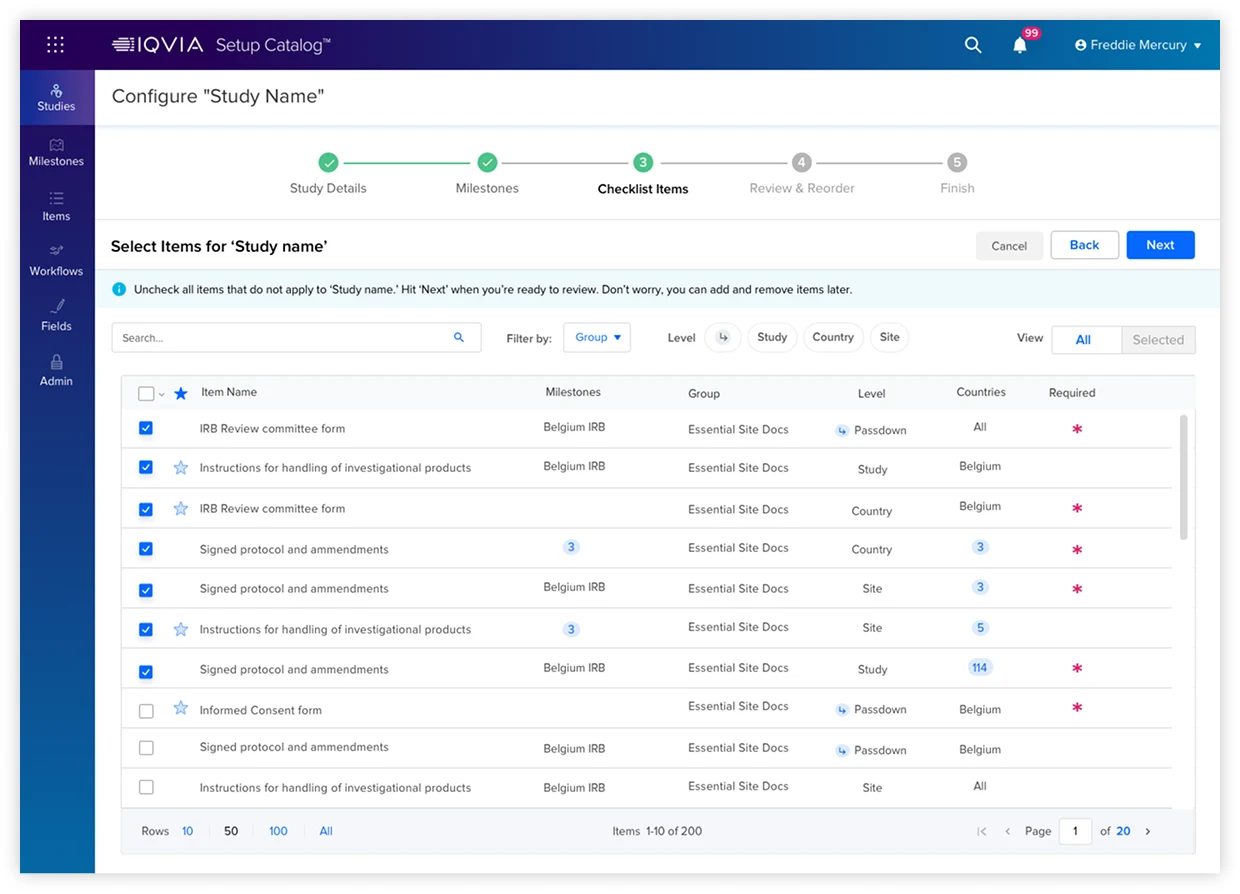
Setup Catalog: a step-by-step flow for choosing which checklist items apply to a study.
Outcome

Trial setup from weeks to hours

Outcome

Two enterprise clients onboarded

Outcome

Reusable templates for a new product offering

01Quick context

Before a new medicine can be tested, hospitals and clinics in many countries have to be approved to run the trial. Each one needs a checklist of paperwork, such as patient consent forms and ethics-board approvals, and the checklist changes by country. Drugmakers (called sponsors) and the research firms that run trials for them track that paperwork in our platform. Someone has to build the checklist for every new trial.

02The problem

Getting a trial ready to start is slow, and it is where much of the time goes. One industry survey of clinical research professionals put it at about 61% of a trial's timeline, and 81% still relied on spreadsheets and manual hand-offs. Our product was no different: setup was manual, and it took weeks.

That was about to become a problem. Two new enterprise clients were each about to start 12+ trials a month, more than we could set up by hand. The goal was 24+ trials a month, plus reusable templates we could eventually offer as a product.

Before designing anything, I mapped, step by step, how four client teams had been onboarded. There was no standard process, and the time ranged from 2–3 days to 18–24 months. Returning clients with the same countries and sites were fast, while a new client took 6–10 weeks at best. The more a setup resembled one we had done before, the faster it went. That told me the slowness was not mainly a screen problem. Every team set things up its own way, so a tool that simply digitized today's steps would digitize the inconsistency too. The design had to make setup repeatable.
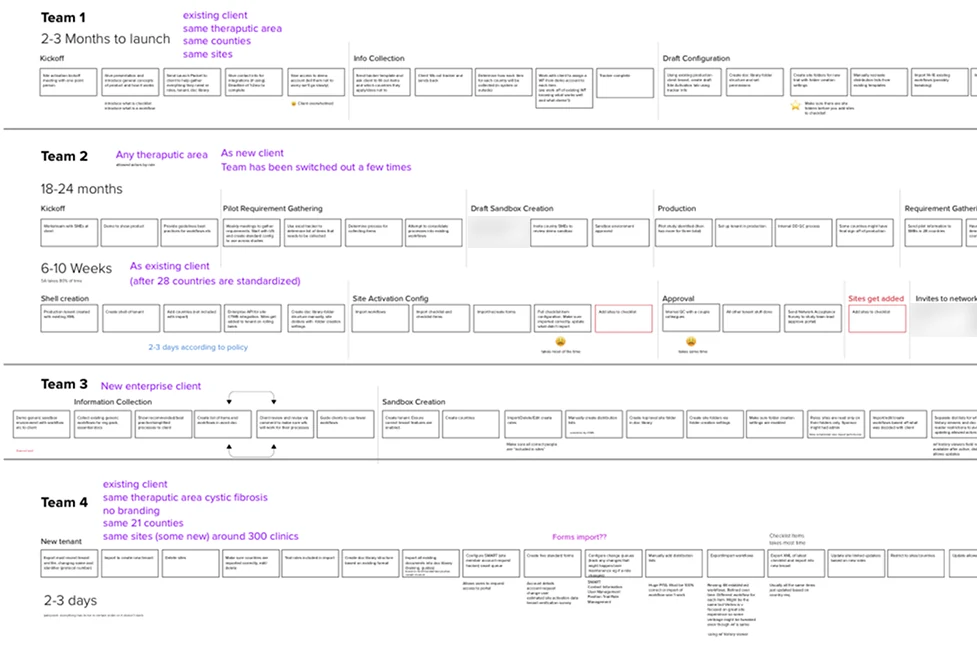
How four client teams were onboarded before this work. Each row is a team and each box is a step. Time to launch ranged from 2–3 days to 18–24 months.

03What I did

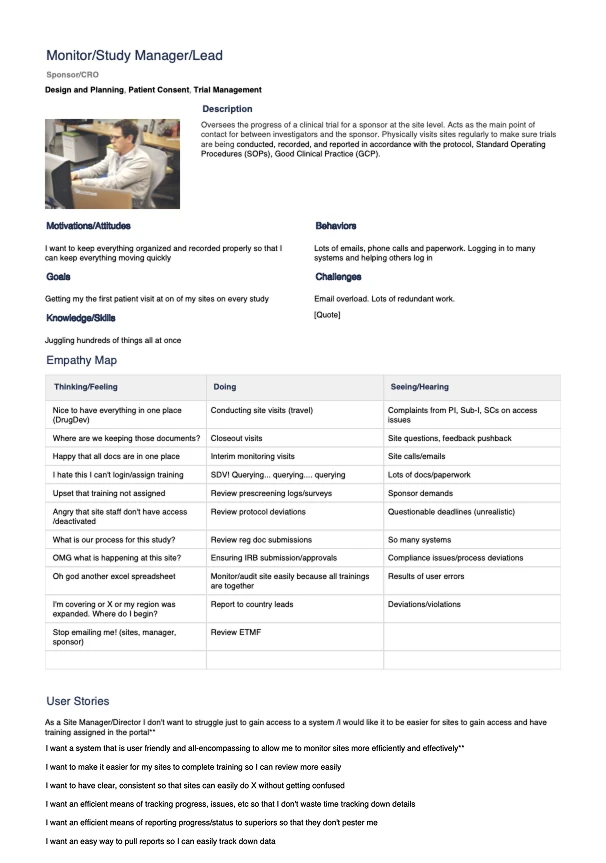
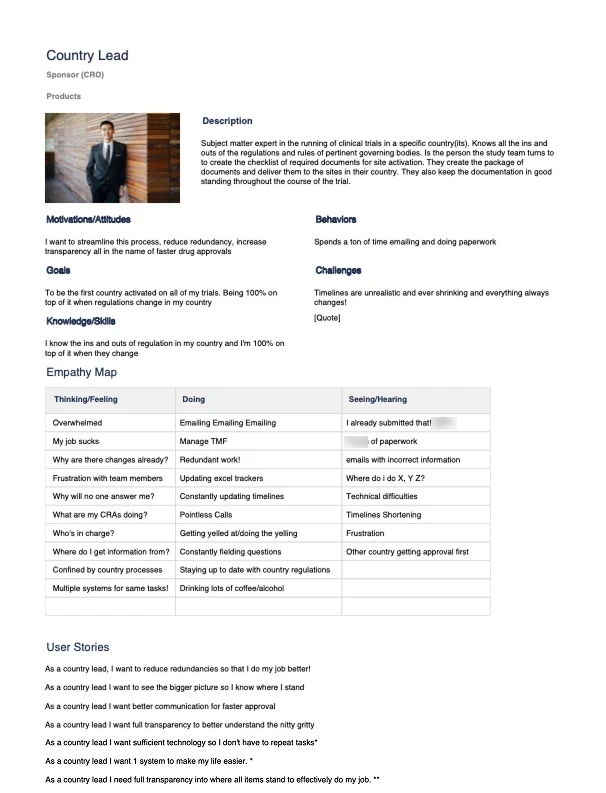
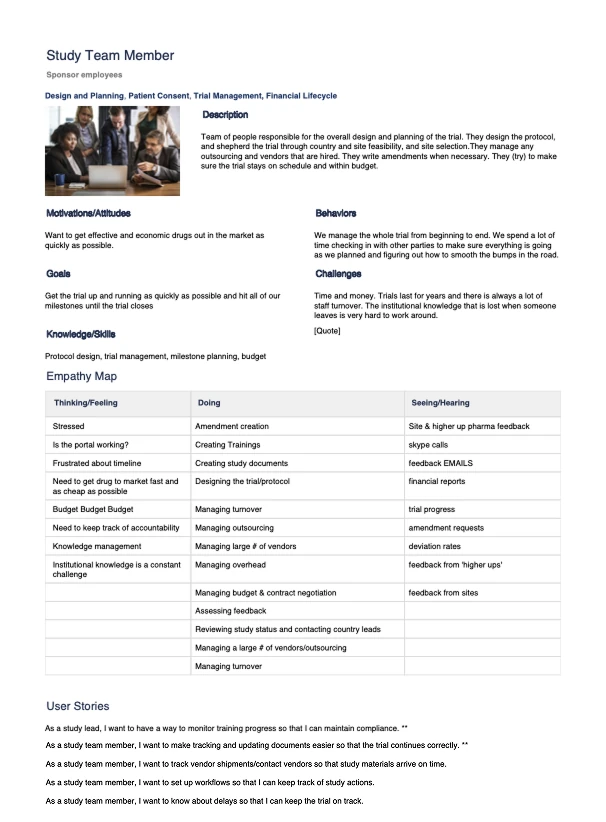
1. Learned the work before designing it. I mapped the setup tasks end to end, then built personas and empathy maps for the three people who do the work: the study manager, the country lead and the study team member. I ran workshops with internal subject-matter experts who knew the work first-hand. The country lead mattered most. They know each country's rules, rules change often, and everything downstream waits on them.

Personas and empathy maps for the study manager, the country lead and the study team member.

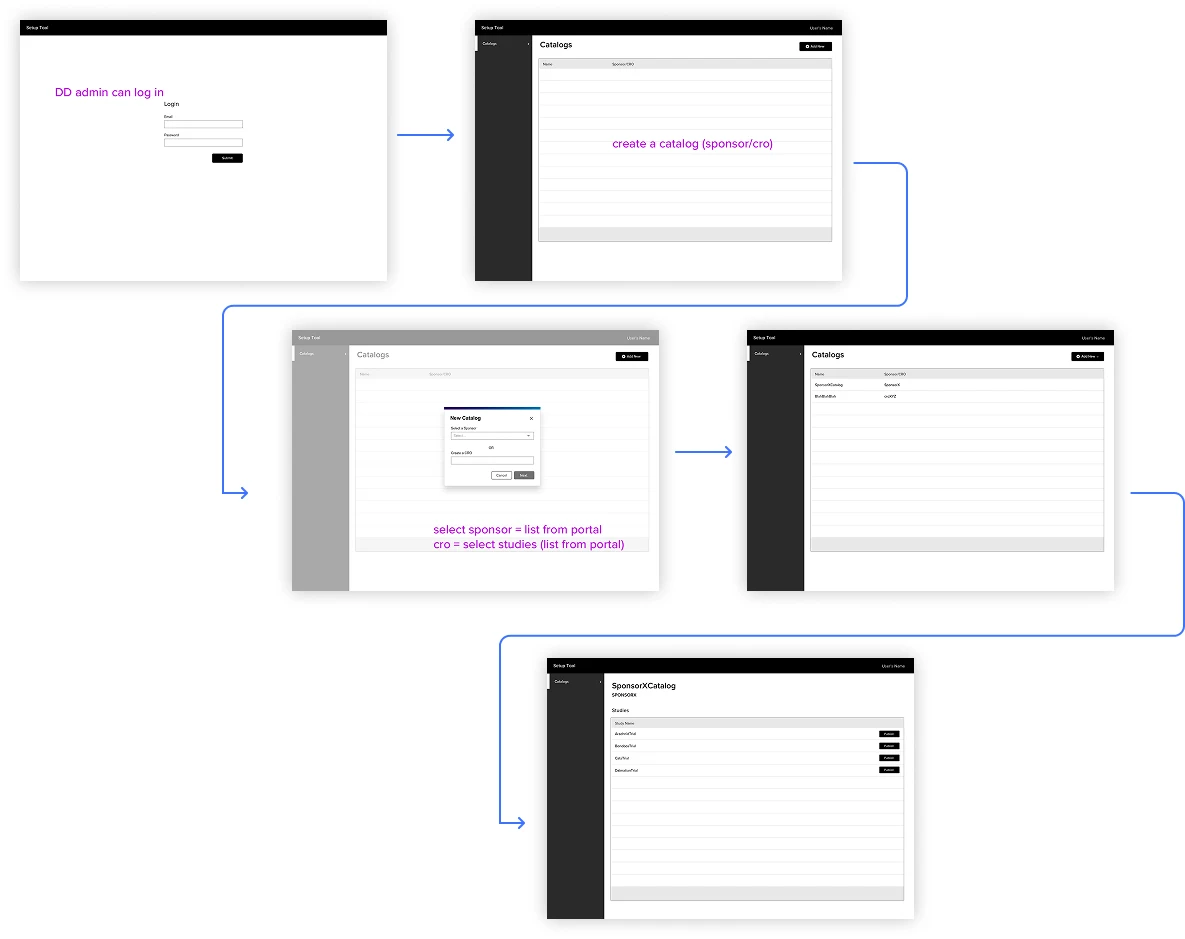
2. Started with the smallest useful version. The requirements list was long. I prioritized it with stakeholders as must-have, should-have and nice-to-have, and defined a first release small enough to ship: an admin creates a catalog (a library of reusable checklist templates for one client), picks the studies, and publishes. That gave engineering and stakeholders something concrete to agree on before any detailed design.

The first version, in wireframes: an admin signs in, creates a catalog for a client, and its studies come from the main platform.

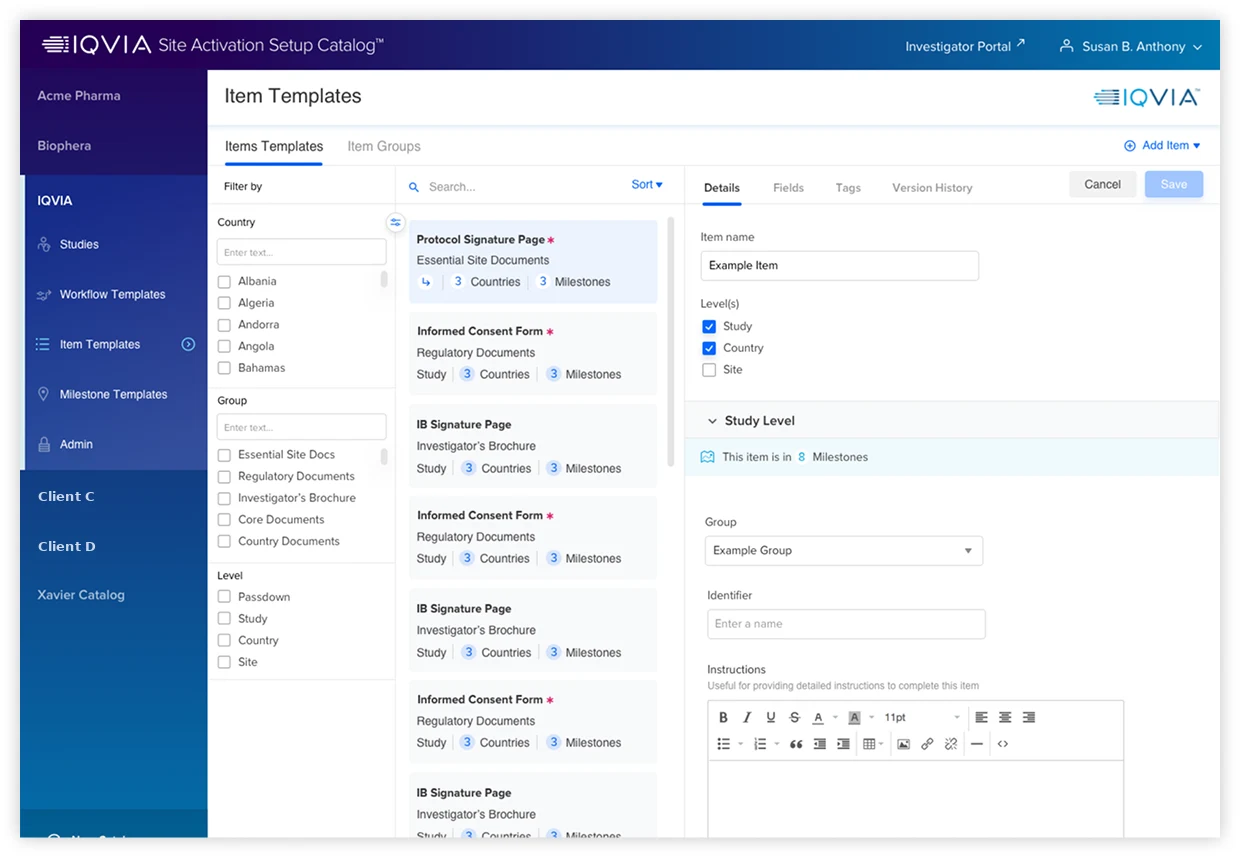
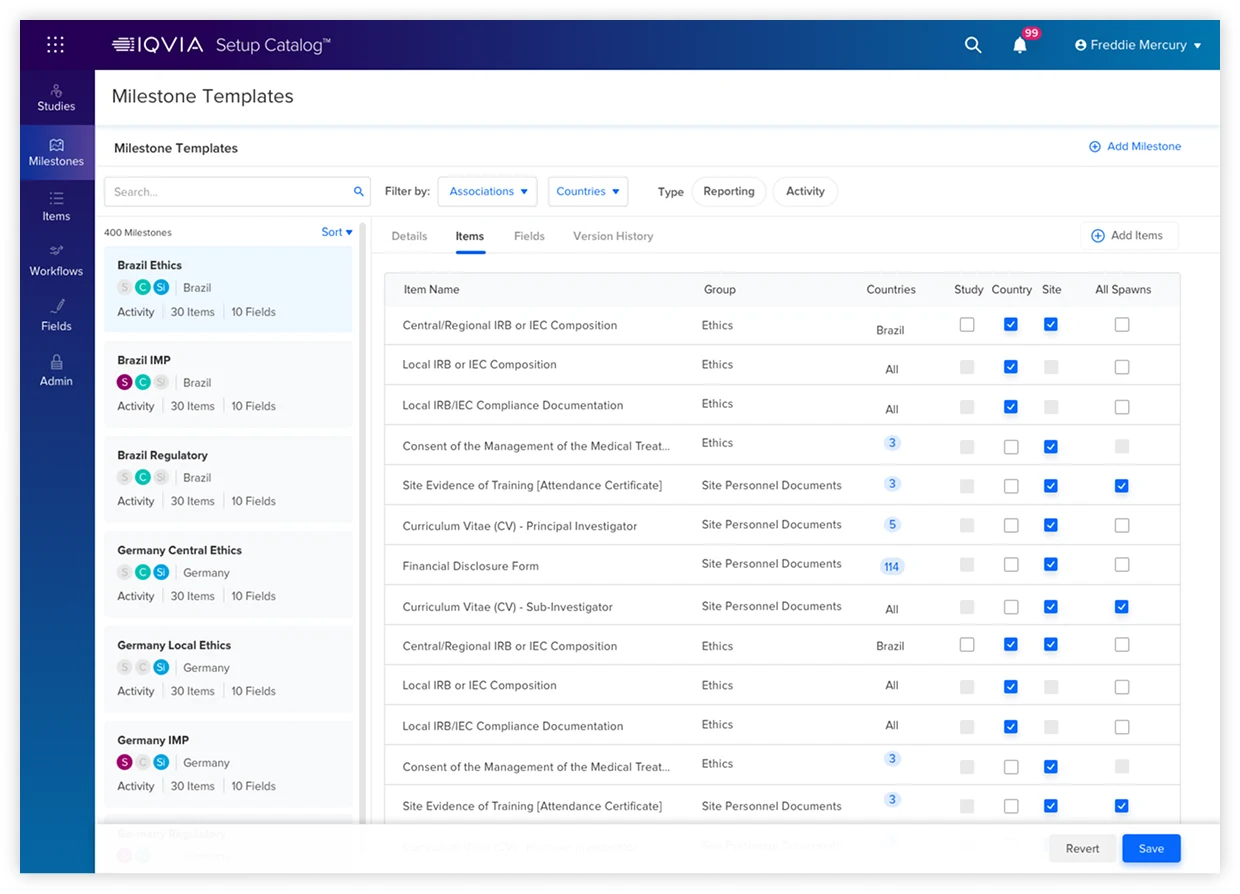
3. Made setup reusable. Paperwork repeats from trial to trial, so I designed templates for checklist items, milestones and approval workflows. An admin builds them once. A new trial starts from a template, and the admin only chooses what is specific to it, such as which countries.

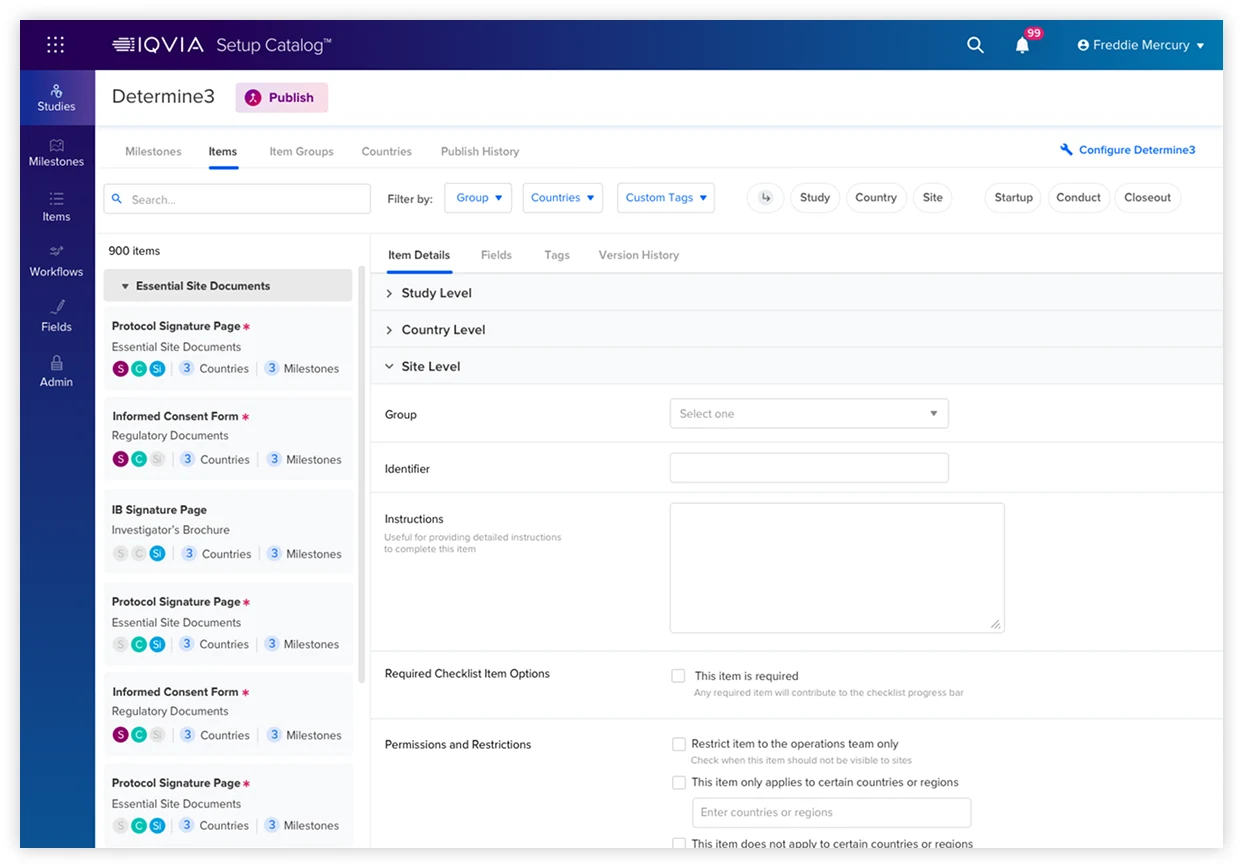
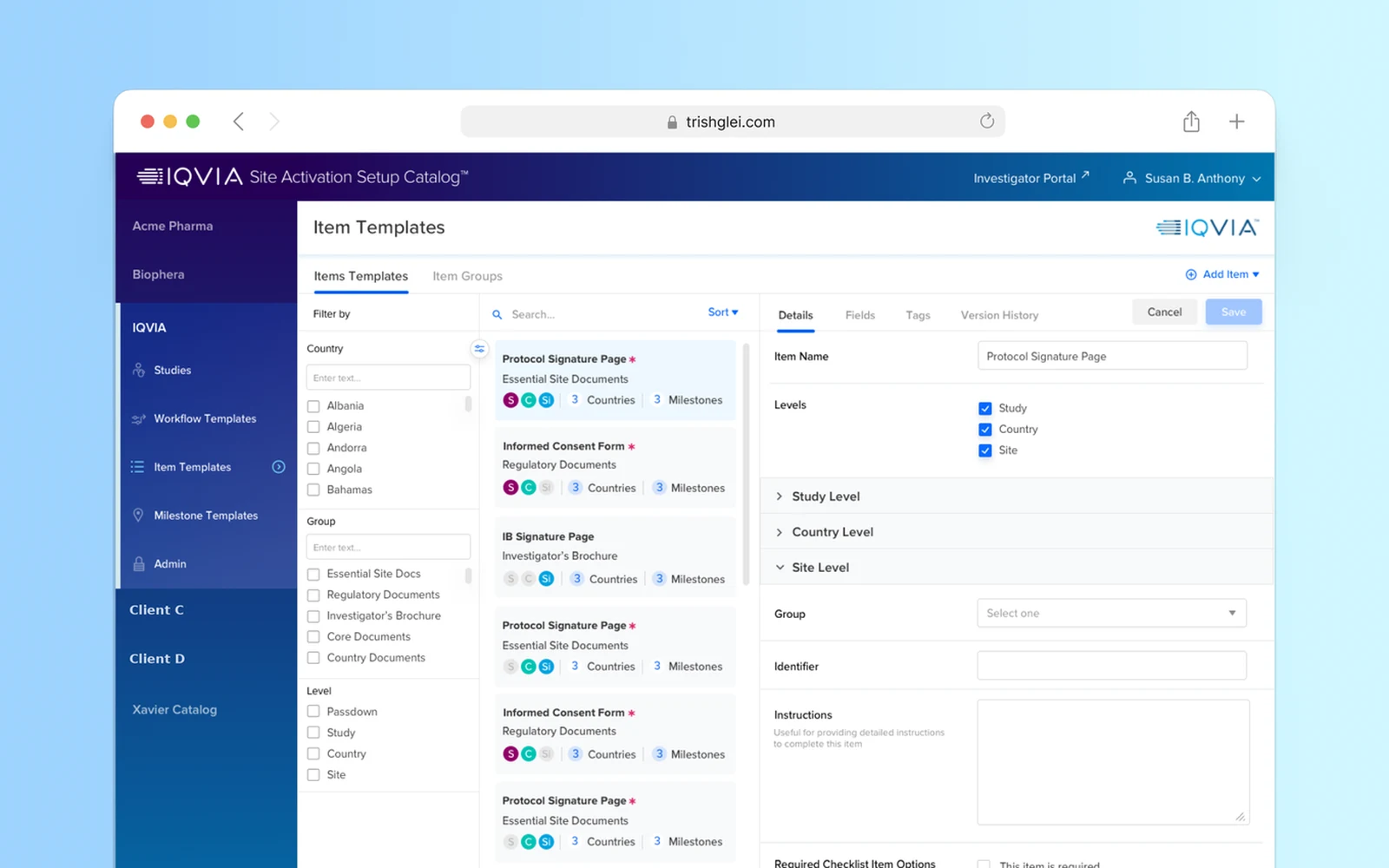
The template library: reusable checklist items, and milestones that group them by country, such as ethics approvals.
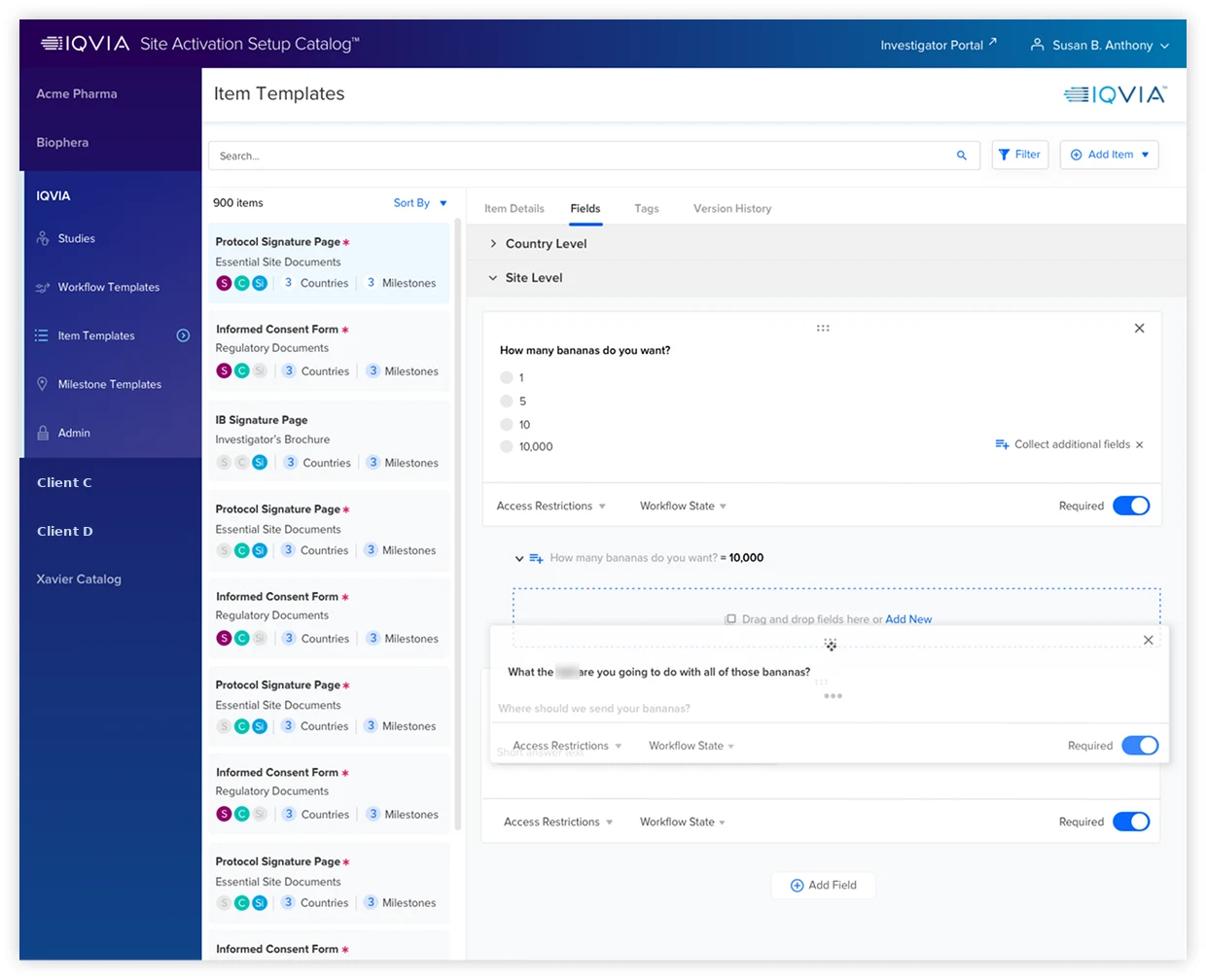
Admins can add fields to an item, such as questions the site must answer. (The sample questions here are placeholder text.)

4. Kept everyone aligned. I wrote the governance document that laid out the problem and the proposed features, and I joined quarterly planning with engineering to map dependencies and size the work. I presented a plan each quarter so stakeholders knew what was coming, and walked them through prototypes in design reviews. We shipped in two releases: core setup first, then the advanced pieces.

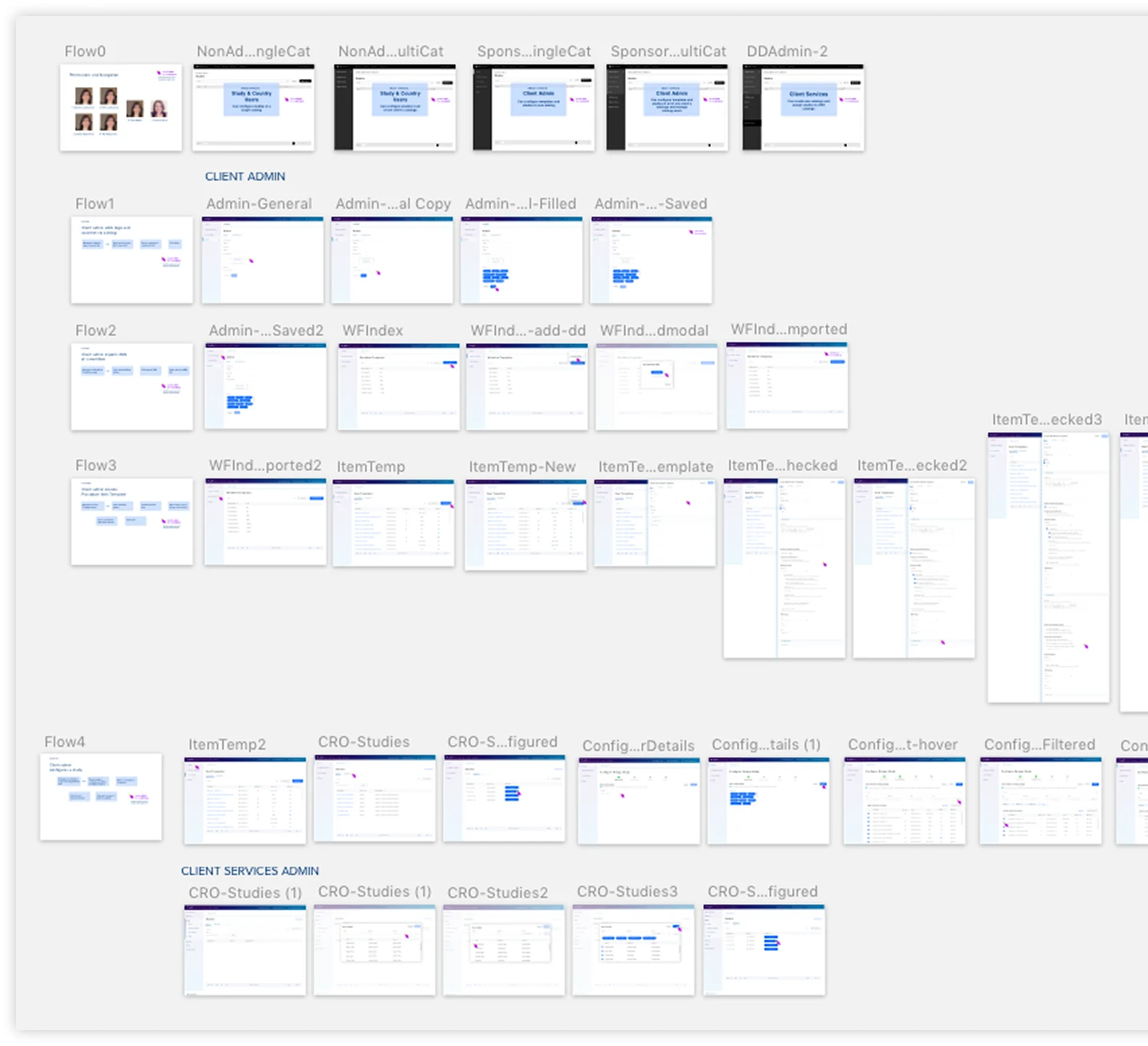
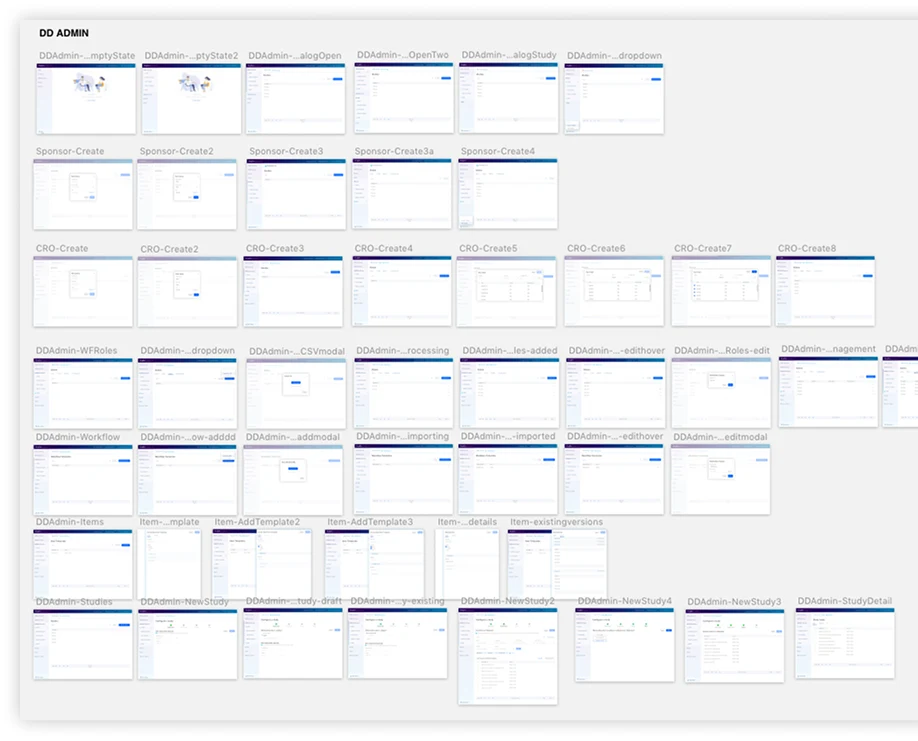
Screen flows mapped by role, which gave stakeholders a shared view of who does what.

04The result

  • Trial setup went from weeks to hours. The "weeks" baseline comes from my mapping of how four clients were onboarded. The "hours" comes from users in the beta pilot program.
  • Two enterprise clients were onboarded, and client services began moving existing clients over.
  • The updated interface felt as easy to use as a consumer product. That mattered because sites will not use a tool that adds work, and they fall back to email and spreadsheets.
  • The templates became a reusable base for a new product offering.
The finished tool: setting up a study step by step from templates, and managing its checklist.

05What I would do differently

Measure beyond the pilot. The "weeks" came from my customer research and the "hours" from beta pilot users, which is a fair comparison but a small one. I would track setup time across all new trials after launch, so the result held up at full scale, not just in the pilot.

Test with the people who run it. My personas came from internal experts. I would also put prototypes in front of the clients' own admins early, since their habits were the ones the tool had to replace.

Design for rules that change. Country requirements change, and a published template can go out of date. If I did this again I would design how a change reaches trials already in progress, not only new ones.